Mission Viejo Homes and Rinnai Tankless Water Heater Installation: Indoor, Outdoor, and Repipe Options
Mission Viejo homeowners comparing Rinnai models: indoor vs outdoor, condensing vs non-condensing, and the gas and vent work that decides how well it runs.
A Rinnai unit on the wall is the visible part of the upgrade. The gas line, vent path, and water piping behind it decide whether it works quietly for years or throws error codes in the first winter. Mission Viejo’s master-planned tracts frequently pair an aging garage tank with original copper, a combination that makes a Rinnai-plus-repipe plan worth pricing.
Repipe OC plans Rinnai tankless water heater installation for Mission Viejo homes from our Laguna Niguel shop on Hillhurst Drive, with permits and inspection included.
Local factors in Mission Viejo
National install guides do not account for Mission Viejo specifics: Santa Margarita Water District water, the housing mix in Painted Trails, Athens, Olympiad, Casta del Sol, Wilderness Glen, and local permit and air-quality requirements.
We photograph the current setup, note anything that affects the install, and give you a written scope that separates the heater itself from gas, venting, and any piping work.
What Mission Viejo homeowners usually want from a Rinnai upgrade
Most people who ask us about Rinnai want three things: hot water that does not run out halfway through the second shower, a unit that frees up garage or closet space, and lower standby losses than a tank that keeps 40 or 50 gallons hot around the clock. Those goals are realistic—when the installation is planned around real household demand.
The work behind a clean result is less glamorous: confirming gas pressure under load, choosing an indoor or outdoor model that suits the wall, and making sure the water lines feeding the heater are not the next thing to fail.
Keeping a Rinnai running: descaling and filters
Minerals in Orange County water slowly coat the heat exchanger inside any tankless unit. Rinnai, like other manufacturers, calls for periodic flushing. We install isolation valves with service ports so the flush is a quick visit instead of a re-plumbing job.
Check the inlet water filter screen occasionally, keep the area around an outdoor unit clear, and watch for error codes on the controller. Optional whole-house filtration can be discussed separately; we do not sell water softeners as a fix for heater or pipe problems.
Venting and clearances done to code
Indoor Rinnai units must vent to the outdoors with the materials and lengths their installation manual allows. Condensing models typically use plastic vent pipe; non-condensing indoor units need venting rated for hotter exhaust. Terminations have to clear windows, doors, air intakes, and walkways by set distances.
Outdoor models avoid vent pipe but still have clearance rules. We lay out the termination or mounting spot during the estimate so you can see exactly where the unit and any vent cap will sit before anything is drilled.
Mission Viejo install notes
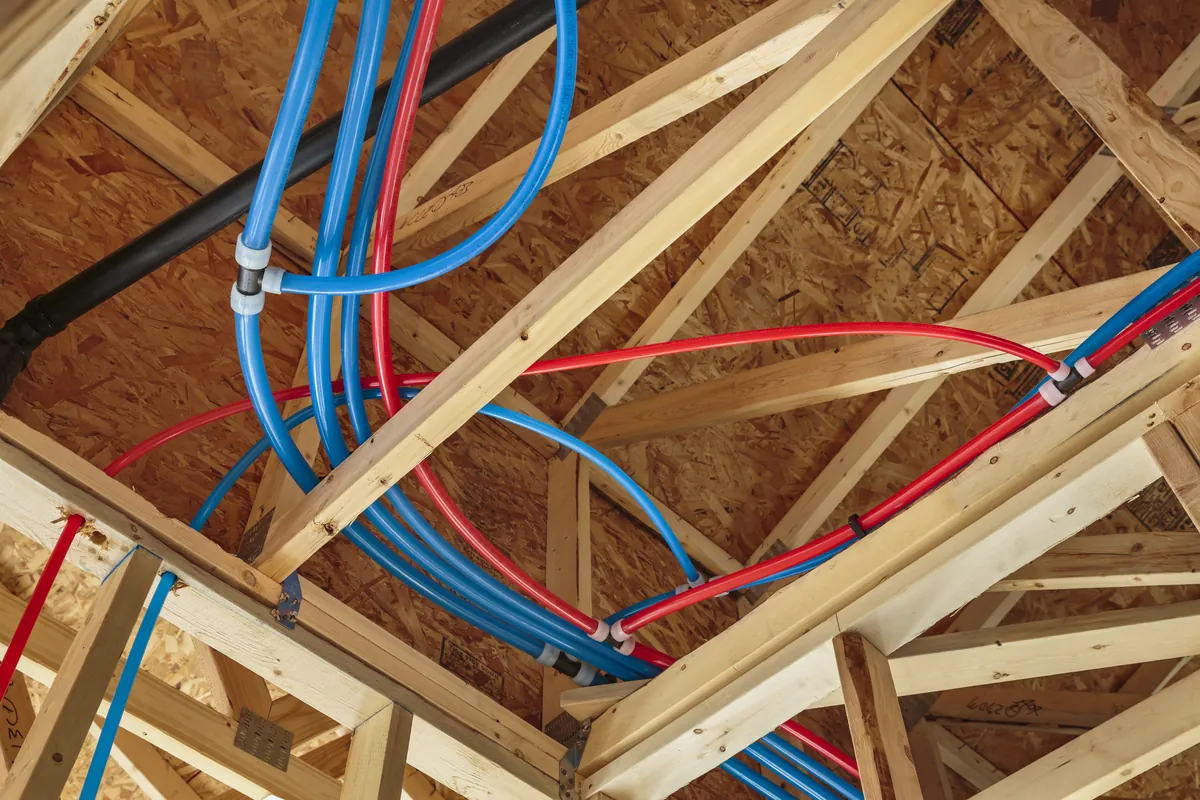
In Painted Trails, Olympiad, and Casta del Sol we frequently open a garage wall for a heater swap and find original copper with green crusting at the joints. When that shows up, we photograph it and price the Rinnai alone and with a PEX-A repipe so you can compare. Doing both in one visit avoids reopening the same drywall later.
Why the pipes feeding the heater matter
A tankless unit is only as reliable as the water reaching it. Scale and corrosion flakes from old galvanized can clog inlet screens. Thin, pitted copper can spring a leak right after a heater swap changes pressures. Polybutylene fittings are a known failure point regardless of the heater brand.
When we see those conditions, we say so plainly and outline what a whole-house PEX-A repipe would involve. You decide whether to do it now, in phases, or later—but you decide with the facts.
Questions we ask before recommending a model
- How many bathrooms are used at the same time on a busy morning?
- Is there a large soaking tub or multi-head shower?
- How far is the farthest fixture from the current heater location?
- Does the dishwasher or washer run while people shower?
- Are you planning to add a bathroom or ADU?
The answers decide the model, whether recirculation is worth adding, and how much gas capacity the home needs.
Condensing or non-condensing: picking the right Rinnai family
Rinnai sells both condensing and non-condensing tankless lines. Condensing models capture heat from exhaust gases with a second heat exchanger, run cooler exhaust, and typically vent through plastic pipe—but they produce acidic condensate that needs a drain and usually a neutralizer. Non-condensing models are simpler to drain but need venting rated for hotter exhaust when installed indoors.
Outdoor-rated units skip interior venting entirely and mount on an exterior wall, which is common in coastal Orange County where freezing is rare. Indoor units suit garages, utility rooms, or homes where HOA rules limit what can hang on the outside of the house.
Before you book: four things to know
- Rinnai makes indoor and outdoor, condensing and non-condensing models—location drives the choice.
- Gas capacity is checked first; upgrades are listed in the estimate.
- Permits and inspection are included in a proper install.
- Old copper, galvanized, or polybutylene lines may be worth replacing at the same time.
Next step for Mission Viejo homeowners
Get a written Rinnai install plan for your Mission Viejo property: (949) 524-2362 · [email protected] · https://repipesoc.com. Repipe OC, 23821 Hillhurst Drive, Laguna Niguel, CA 92677. Licensed C-36 #1087885.
Repipe OC near you
Not in Mission Viejo? The same crew serves nearby cities. See the Repipe OC hub (repipeinc.com), or jump to a neighboring city:
 Written by Repipe OC · CSLB #1087885 C-36 · 23821 Hillhurst Drive, Laguna Niguel, CA 92677 · (949) 524-2362